
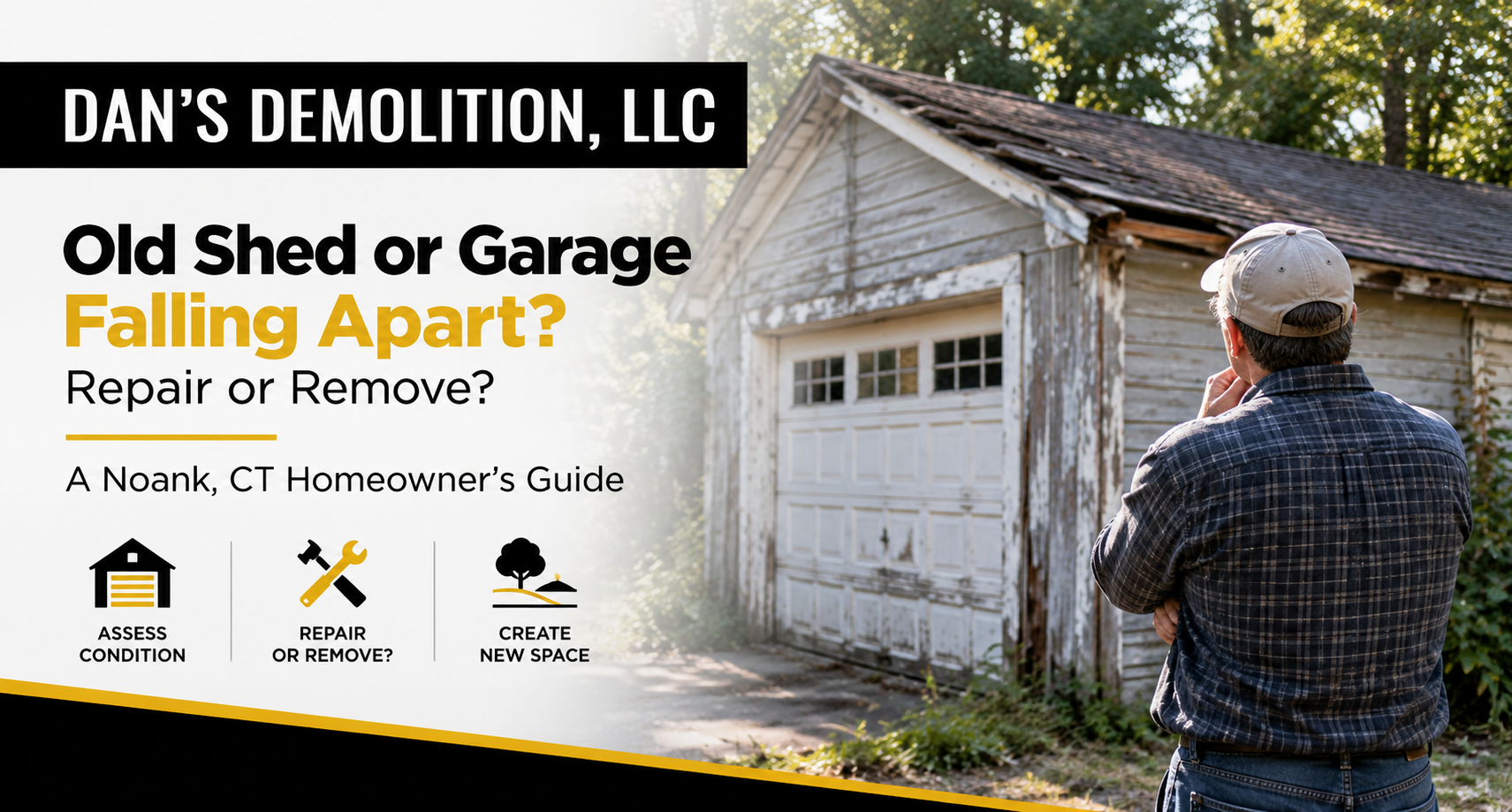
An old shed or detached garage can be useful for storage, tools, vehicles, or weekend projects. But as these structures age, homeowners may start noticing a leaking roof, rotting wood, cracked concrete, leaning walls, damaged siding, or doors that no longer close properly. At that point, an important question comes up: should you repair the structure or remove it completely?
For Noank, CT homeowners, the answer depends on more than appearance. The condition of the structure, foundation, safety concerns, future plans for the property, and cost of ongoing repairs should all be considered. Understanding these factors can make the decision much easier.
Start With the Overall Condition
A few damaged boards or a small roof leak do not automatically mean a structure needs demolition. If the shed or garage is generally stable and still useful, targeted repairs may be enough.
However, problems become more concerning when several parts are deteriorating at the same time. Look for leaning walls, sagging roof sections, widespread rot, major cracks, loose materials, or signs that the structure is shifting.
Companies such as Dan Demolition handle full-structure demolition as well as selective demolition, concrete and site clearing, debris removal, and related services, showing that different properties can require very different approaches.
Ask Whether You Still Need the Structure
Condition is only one part of the decision. Think about how you actually use the building.
If an old garage still provides valuable parking or workshop space, repairing it may make sense. But if a deteriorating shed has been empty for years and is simply taking up usable yard space, investing heavily in repairs may offer little benefit.
Consider what you would do with the area if the structure disappeared. Could it become a garden, patio, larger lawn, new garage, addition, or another useful outdoor space?
Sometimes the future value of the space matters as much as the condition of the old building.
Look Closely at the Foundation
Homeowners often focus on the visible walls and roof, but the condition below them matters too.
A shed may sit on blocks, gravel, concrete, or another type of base, while a garage may have a substantial concrete slab or foundation. Cracking, settling, movement, or deterioration below the structure can influence whether repairing everything above it is worthwhile.
If demolition becomes the better option, decide whether the foundation or slab will remain or also needs removal. The company’s Noank service page notes that site-clearing projects can include old concrete and foundation removal in addition to removing structures.
Water Damage Can Be More Than Cosmetic
A small water stain may be manageable, but repeated moisture exposure can create larger problems over time.
Check the roof, siding, doors, windows, and areas where the structure meets the ground. Persistent moisture can contribute to wood deterioration and damage materials that once provided structural support.
Also consider why water is reaching the building. A repair may not last if poor drainage, roof failure, or ground conditions continue causing the same problem.
Understanding the source of the damage is important before spending money on cosmetic improvements.
Consider What May Be Inside an Older Structure
Older garages and sheds can contain materials or stored items that need special consideration before removal begins.
Old paints, fuels, chemicals, equipment, batteries, and other materials should not simply be mixed into demolition debris. Depending on the building’s age and materials, certain construction products may also require professional identification or handling.
Dan’s Noank demolition guidance specifically notes that older buildings can contain materials such as lead paint or asbestos that may require appropriate identification and regulated handling.
This is one reason homeowners should avoid treating demolition as simply knocking a structure down and hauling everything away.
Repair Costs Can Add Up Quickly
When deciding between repair and removal, look at the complete picture rather than one individual repair.
Replacing roofing may seem reasonable, but what if the siding, doors, framing, and foundation also need attention? Several smaller projects can eventually become a significant investment.
On the other hand, a structurally sound building with one isolated problem may still have many useful years ahead.
The goal should not automatically be to choose the cheapest immediate option. Consider how much work the structure needs now, how useful it will remain, and whether additional repairs are likely in the near future.
Think About Access Before Removal
Removing a backyard structure requires a practical way to reach it.
Fences, trees, neighboring buildings, overhead wires, narrow side yards, landscaping, and driveways can all affect equipment and debris removal. A garage located close to a house may also require a different approach from a freestanding shed in an open yard.
Homeowners researching Land clearing and demolition services Noank, CT should expect site access, nearby structures, utilities, hazards, debris management, and future plans for the property to be considered before work begins.
What Happens After Removal?
This question is easy to overlook.
Removing the building may leave behind a concrete slab, foundation, disturbed ground, or an open area that requires additional preparation. If you plan to build something new, the site may need to be cleared and prepared for the next phase.
Dan’s Noank service information describes demolition and land clearing as connected to broader site preparation, including concrete removal, foundation removal, hauling, and cleanup where appropriate.
Planning the next use of the space before demolition can prevent unnecessary work later.
Final Thoughts
An old shed or garage does not need to be removed simply because it looks worn. Likewise, continuing to repair a structure that is deteriorating in several areas may not always be practical.
For Noank homeowners, consider the structural condition, water damage, foundation, usefulness, repair needs, site access, materials inside the building, and future plans for the space.
The most important question is not simply, “Can this building be repaired?” It is also, “Does repairing it still make sense for how I want to use my property?”
Once you answer both questions, deciding between repair and removal becomes much clearer.