
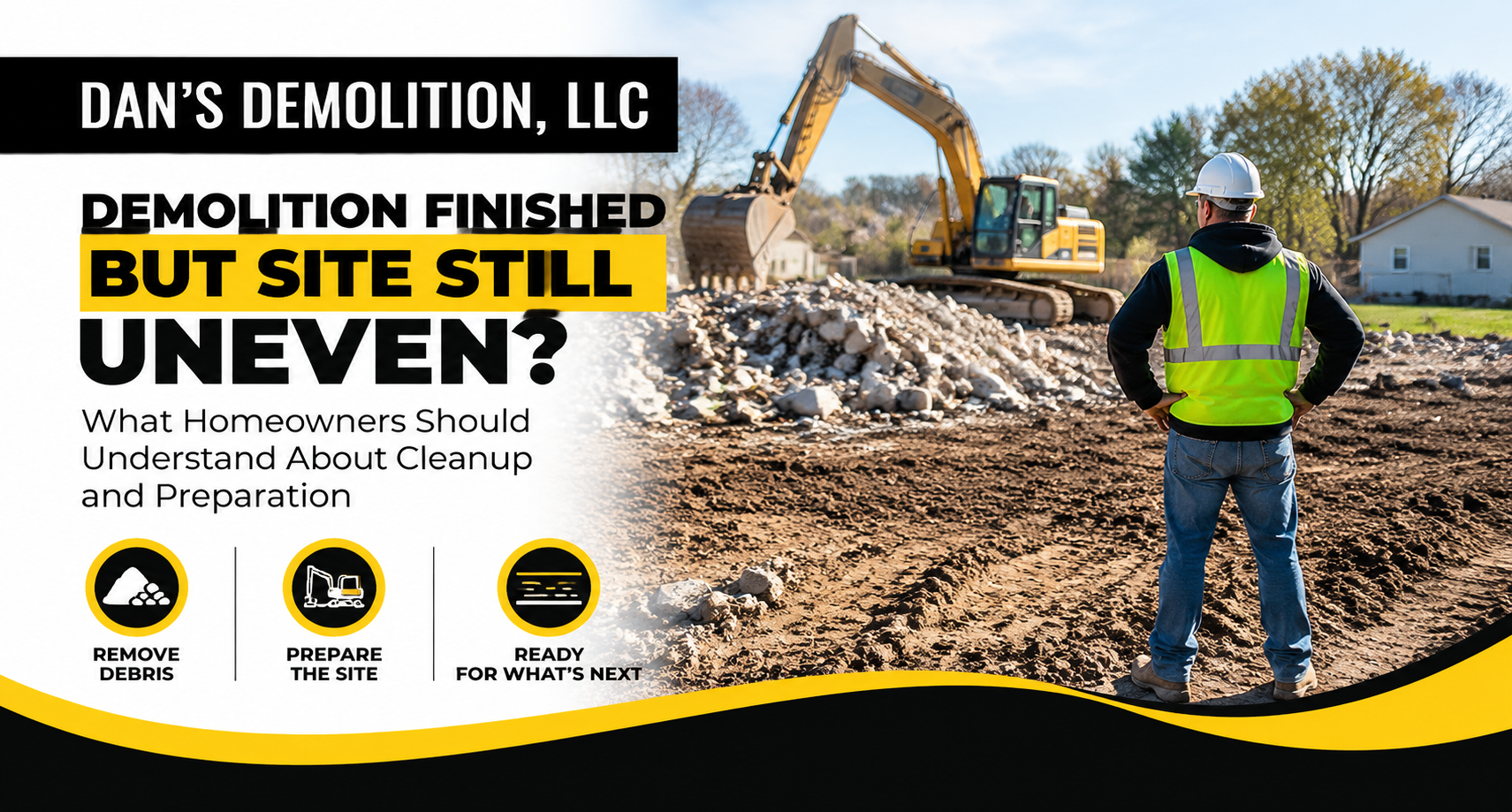
Many homeowners assume that once a building or structure is removed, the demolition process is complete. However, demolition is only one part of preparing a property for its next use. After a structure comes down, the remaining site may have uneven ground, leftover materials, compacted soil, old foundations, or areas that require additional preparation.
An uneven demolition site is not unusual. The removal of concrete, foundations, underground materials, and structures can change the condition of the land. Before beginning new construction, landscaping, or another property improvement project, understanding what happens after demolition can help homeowners avoid future problems.
Why a Demolition Site May Look Uneven
During demolition, heavy equipment is used to remove structures, concrete, debris, and other materials. This process naturally affects the ground around the former building area.
Several factors can contribute to an uneven site, including:
- Removal of foundations or concrete slabs
- Soil movement during equipment operation
- Areas where underground structures were removed
- Remaining debris or materials below the surface
- Natural settling after demolition work
Even when a demolition project is completed safely, the property may still require additional grading or preparation before it is ready for the next phase.
Demolition Removal Is Different From Site Preparation
Demolition focuses on safely removing an existing structure. Site preparation focuses on making the land suitable for what comes next.
For example, a homeowner removing an old garage may eventually want to build a new structure, create a garden area, expand outdoor living space, or improve drainage. Each of these projects requires a stable and properly prepared surface.
Simply removing the old structure does not automatically create a finished building area. The remaining soil conditions, drainage patterns, and elevation changes should also be considered.
Companies like Dan Demolition handle demolition projects with attention to removal, cleanup, and preparing properties for future improvements.
Why Proper Cleanup Matters After Demolition
A demolition site may contain more than visible debris. Materials such as concrete pieces, wood, metal, nails, old building components, and other remnants may remain after a structure is removed.
Thorough cleanup is important because leftover materials can interfere with:
- Future construction projects
- Landscaping plans
- Equipment access
- Drainage improvements
- Safe use of the property
A properly cleared site provides a better starting point for whatever comes next.
Grading Helps Restore the Property
After demolition, grading may be needed to improve the shape and slope of the land.
Grading involves adjusting the soil surface to create a more suitable elevation and drainage pattern. Proper grading can help prevent water from collecting in unwanted areas and can make the property easier to develop.
Without proper grading, homeowners may experience issues such as:
- Standing water after rain
- Muddy areas
- Uneven surfaces
- Poor drainage around future structures
The correct approach depends on the property, soil conditions, previous structure, and future plans.
Consider Drainage Before Starting the Next Project
Demolition can change how water moves across a property.
An old building foundation, driveway, or landscape feature may have affected water flow before removal. Once those elements are gone, rainwater may travel differently across the land.
Before installing new features, homeowners should consider:
- Where rainwater currently moves
- Whether low areas collect water
- Whether the property slopes toward or away from structures
- Whether additional drainage solutions are needed
Planning drainage early can help prevent problems after new construction or landscaping is completed.
Land Clearing and Demolition Projects Need Complete Planning
Some properties require more than just structure removal. Overgrown areas, old structures, trees, brush, concrete, and unwanted materials may all need to be addressed before a property is ready for improvement.
Professional Land clearing and demolition services Noank, CT can help property owners understand what steps may be needed when preparing land for a future project.
A complete approach may include removing unwanted materials, clearing the area, improving access, and preparing the ground so the next stage of work can begin properly.
Do Not Rush Into New Construction
Starting a new project immediately after demolition may seem efficient, but taking time to evaluate the site can prevent complications.
Before building, homeowners should confirm that:
- The area is properly cleared
- The ground is stable
- Drainage concerns are addressed
- Remaining debris has been removed
- The site matches the requirements of the next project
Proper preparation at this stage can save time and reduce unexpected costs later.
When Should Homeowners Seek Professional Help?
If a demolition site remains uneven, has drainage problems, contains leftover materials, or is difficult to prepare for future use, professional guidance can help identify the best solution.
Every property is different. Soil type, previous structures, terrain, and future plans all influence what preparation work may be required.
A professional evaluation can help determine whether the site needs grading, additional clearing, debris removal, or other improvements before moving forward.
Final Thoughts
Demolition does not always end when the structure is gone. An uneven site after demolition is often a normal part of the process and may indicate that additional cleanup and preparation are needed before the property is ready for its next purpose.
Homeowners should consider the condition of the soil, drainage, debris removal, and overall site preparation instead of focusing only on structure removal. A properly prepared property creates a stronger foundation for future construction, landscaping, or outdoor improvements.
Taking the time to complete cleanup and preparation after demolition can help ensure the next project starts on a safer, more stable, and better-planned site.